Virtual Reality: At the Dawn of a Medium
“It’s not often that a whole new medium gets born in your lifetime. We will create whole new universes in VR.”
Why Not? — virtual reality artwork by Drue Kataoka Studios (2018). Debuted at Facebook HQ’s inaugural Virtual Reality Art Gathering.
Drue said that in 2017. It has now happened twice in her lifetime. Between 2016 and 2018, when virtual reality was still tethered to cables and skepticism, Drue was among the first artists in the world to treat VR not as a technology, but as an art form enabled by technology. Working in her Silicon Valley studio with the earliest generation of headsets, she pushed the experimental limits of the medium across every axis available to her — visual, spatial, sonic, conceptual. She painted without gravity, without canvas, without the friction of the physical world, building immersive works where the viewer does not stand in front of the art but inside of it.
Le Monde profiled her at the center of this first wave, writing about a generation of artists “tempted by virtual reality” — painting in the air, sculpting in the sky. “We are at the dawn of a revolution,” she told them. “It is a fascinating period to be an artist.”
MoVA: The Museum of Virtual Art
In 2018 Drue founded MoVA, the Museum of Virtual Art — the first museum of its kind dedicated solely to, and built entirely in, virtual reality. A museum with no building, no geography, and no gravity: white gallery walls rising out of an endless virtual forest, artworks the viewer could teleport inside of, wall labels with headphones offering artist commentary in a world where none of it physically existed.
Its inaugural exhibition, “Why Do We Remember the Past but Not the Future?”, took its title from a question posed by the physicist Richard Feynman. The exhibition surveyed Drue’s VR works — reflective fragment sculptures, crystalline forms, glass figures, floating gold islands — and asked what memory, permanence, and objecthood mean in a medium where a work of art is no longer a material thing to look at, but an experience to enter.
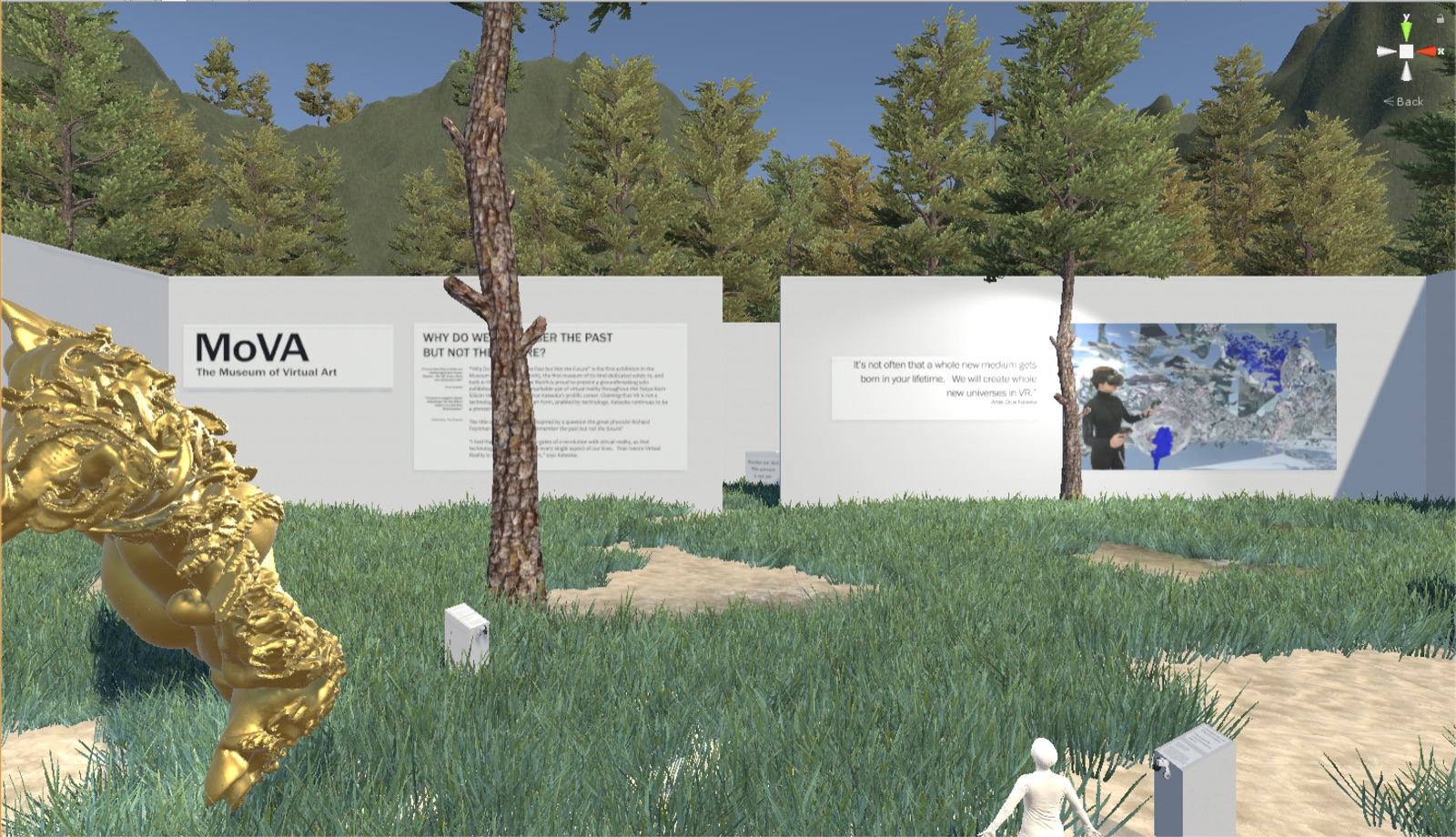
MoVA — white gallery walls rising out of an endless virtual forest.
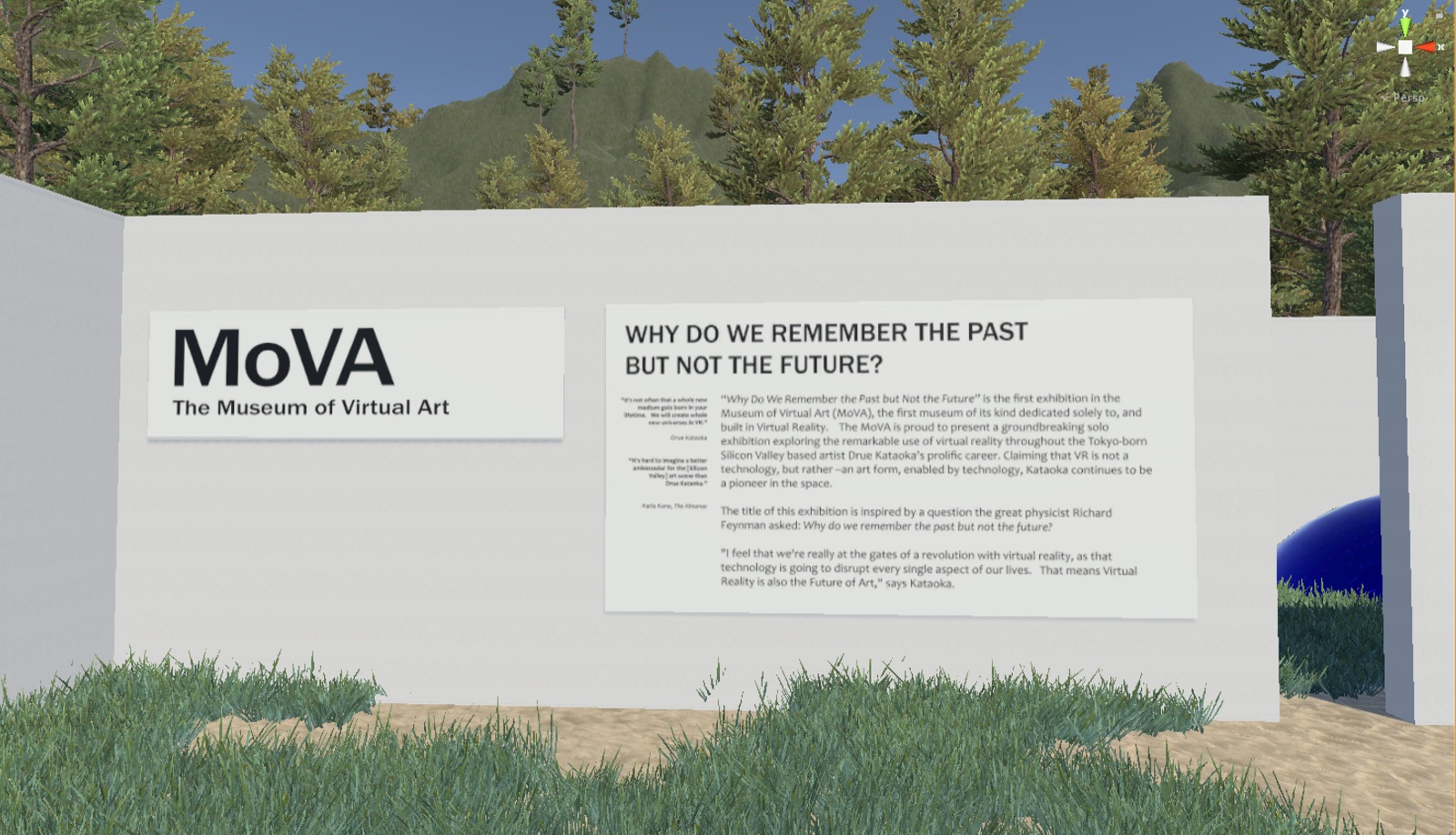
The inaugural exhibition, “Why Do We Remember the Past but Not the Future?”
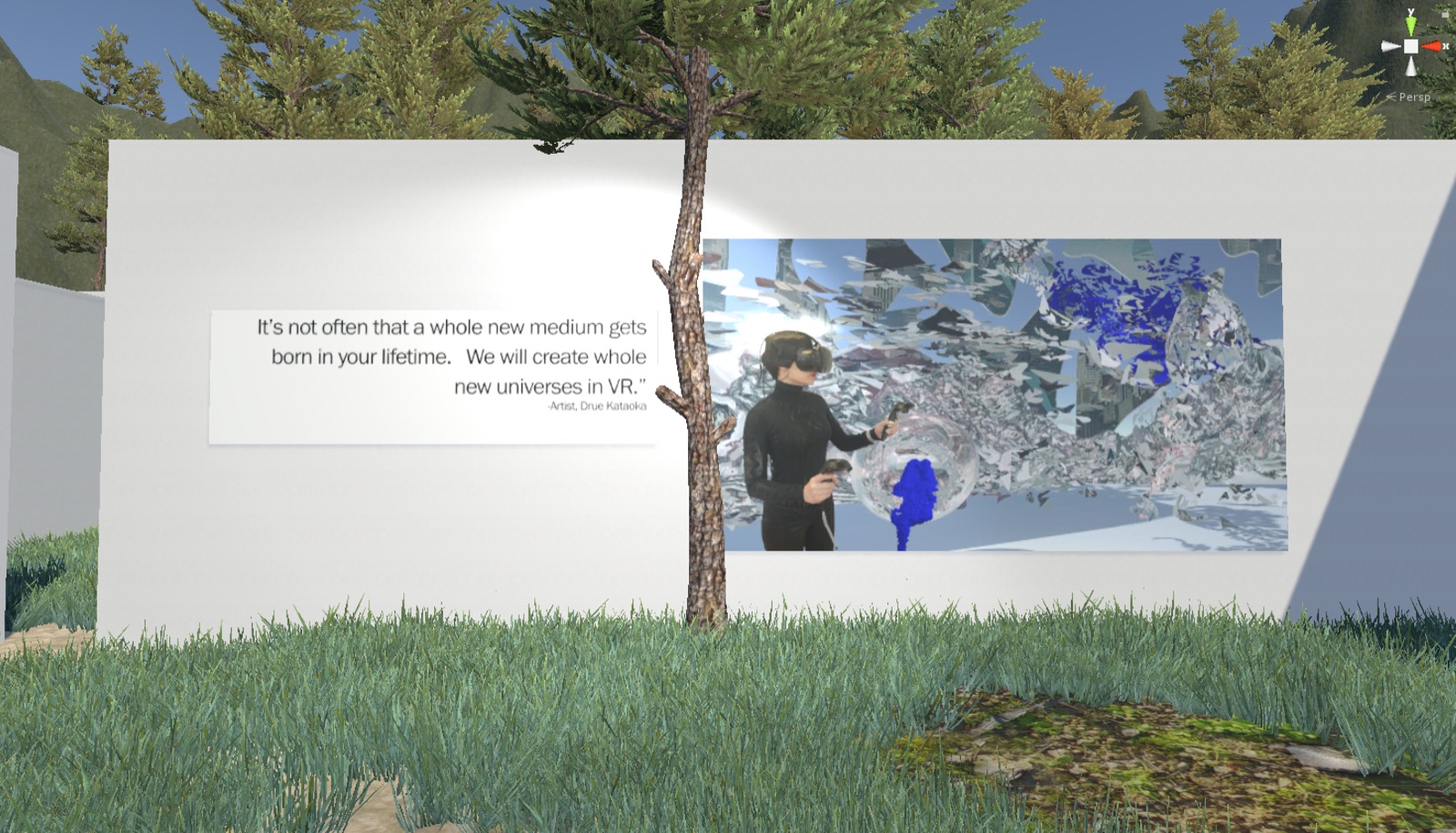
The artist at work in the new medium, beside the words that named this page.
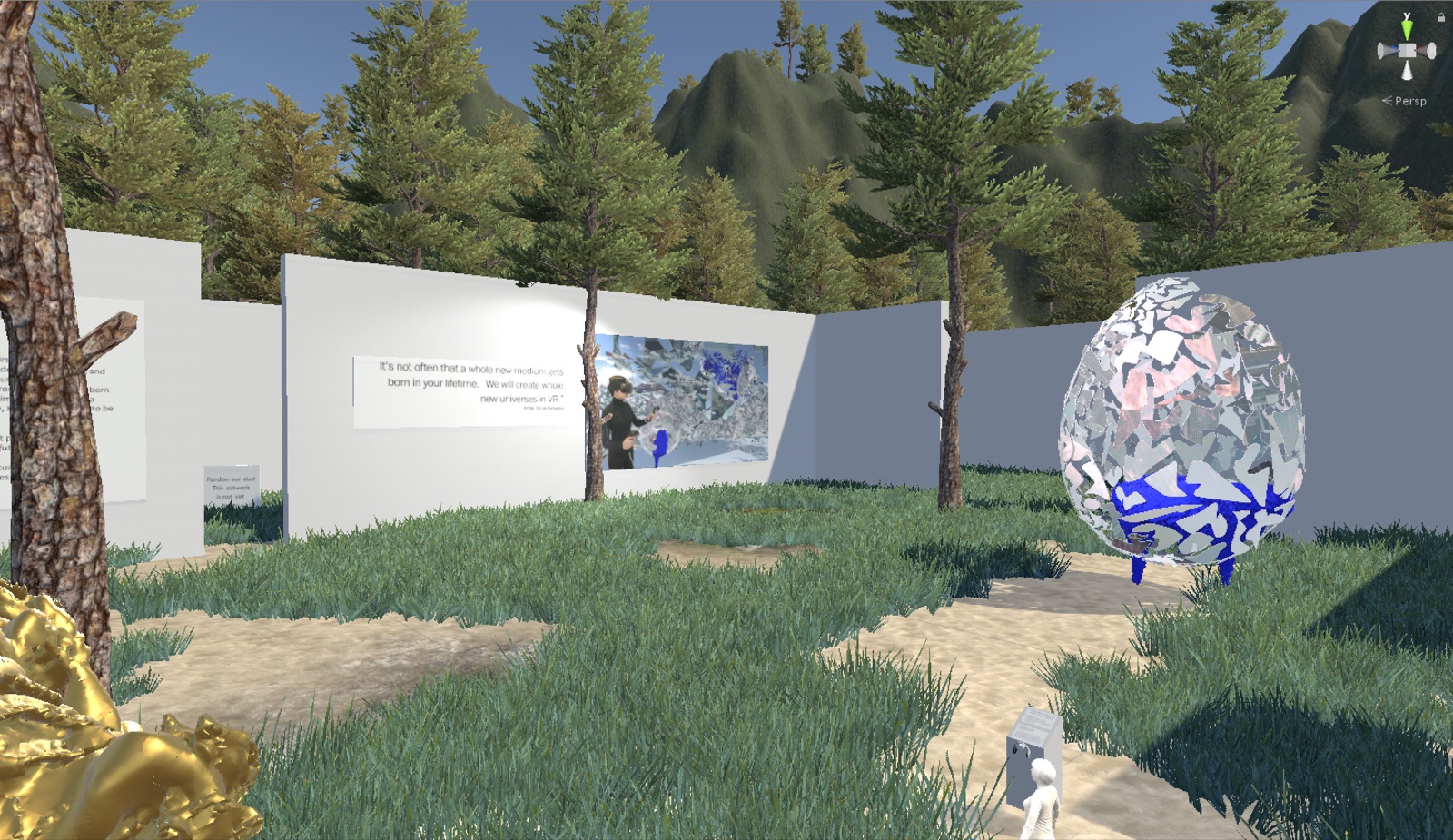
Ascension (2018) on the museum grounds — a work the viewer could teleport inside of.
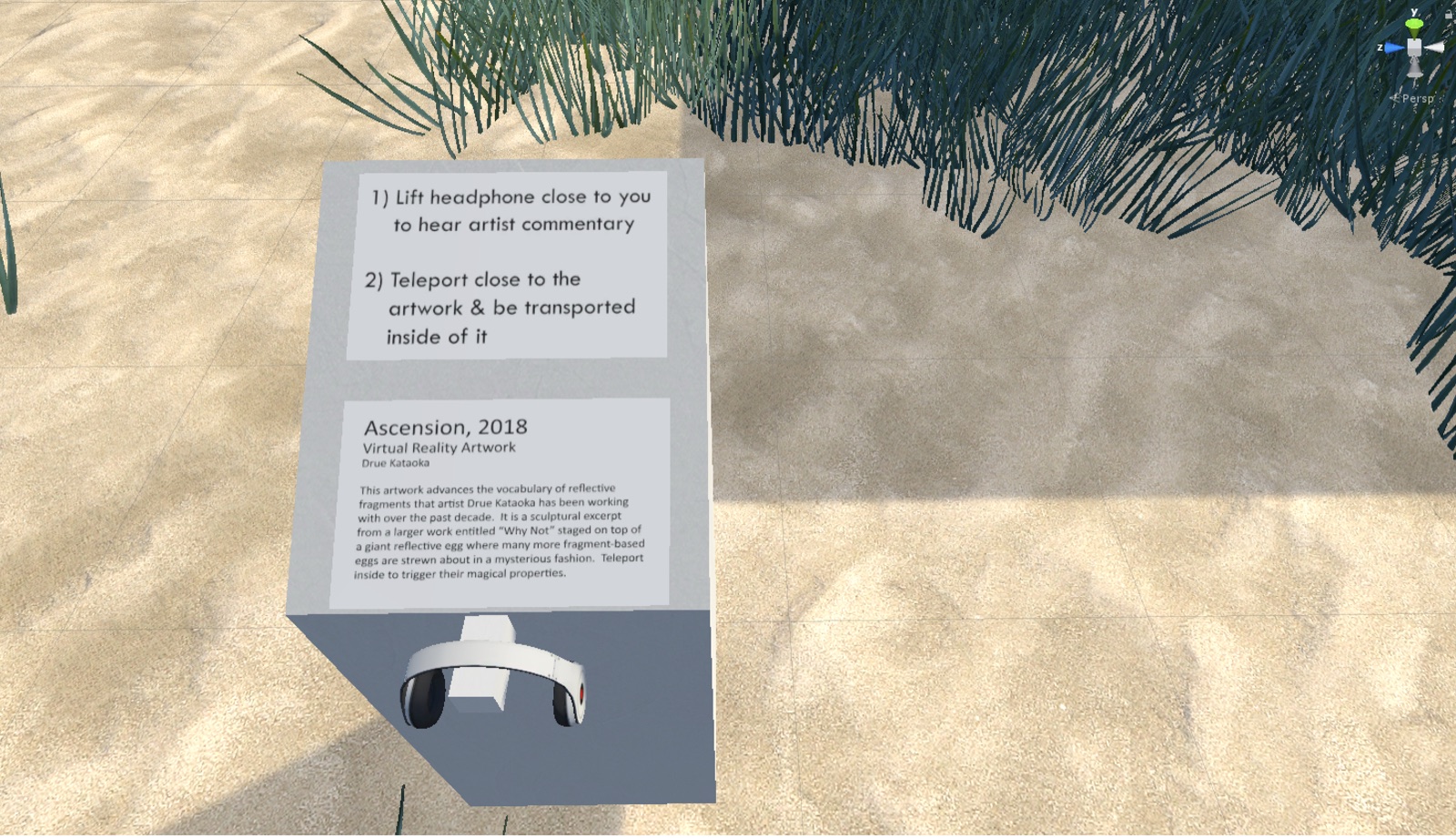
Wall labels with headphones offering artist commentary — in a world where none of it physically existed.
Shaping the Fourth Industrial Revolution
Drue was one of the first members of the World Economic Forum’s steering committee on VR/AR/AI and Blockchain in the Creative Economy of the Fourth Industrial Revolution, helping global leaders understand what immersive technology would mean for human creativity. A short video about this work can be viewed here.
She contributed an essay, “The Future is Virtual, and Exciting: An Artist’s Perspective”, to the World Economic Forum’s book Shaping the Fourth Industrial Revolution, edited by WEF Founder Klaus Schwab, and contributed to the Forum’s report with McKinsey, Creative Disruption: The Impact of Emerging Technologies on the Creative Economy. In that essay she predicted that the earliest headsets were “the Apple II’s of the coming VR revolution” — and that a far larger transformation of human creativity was hiding in plain sight.
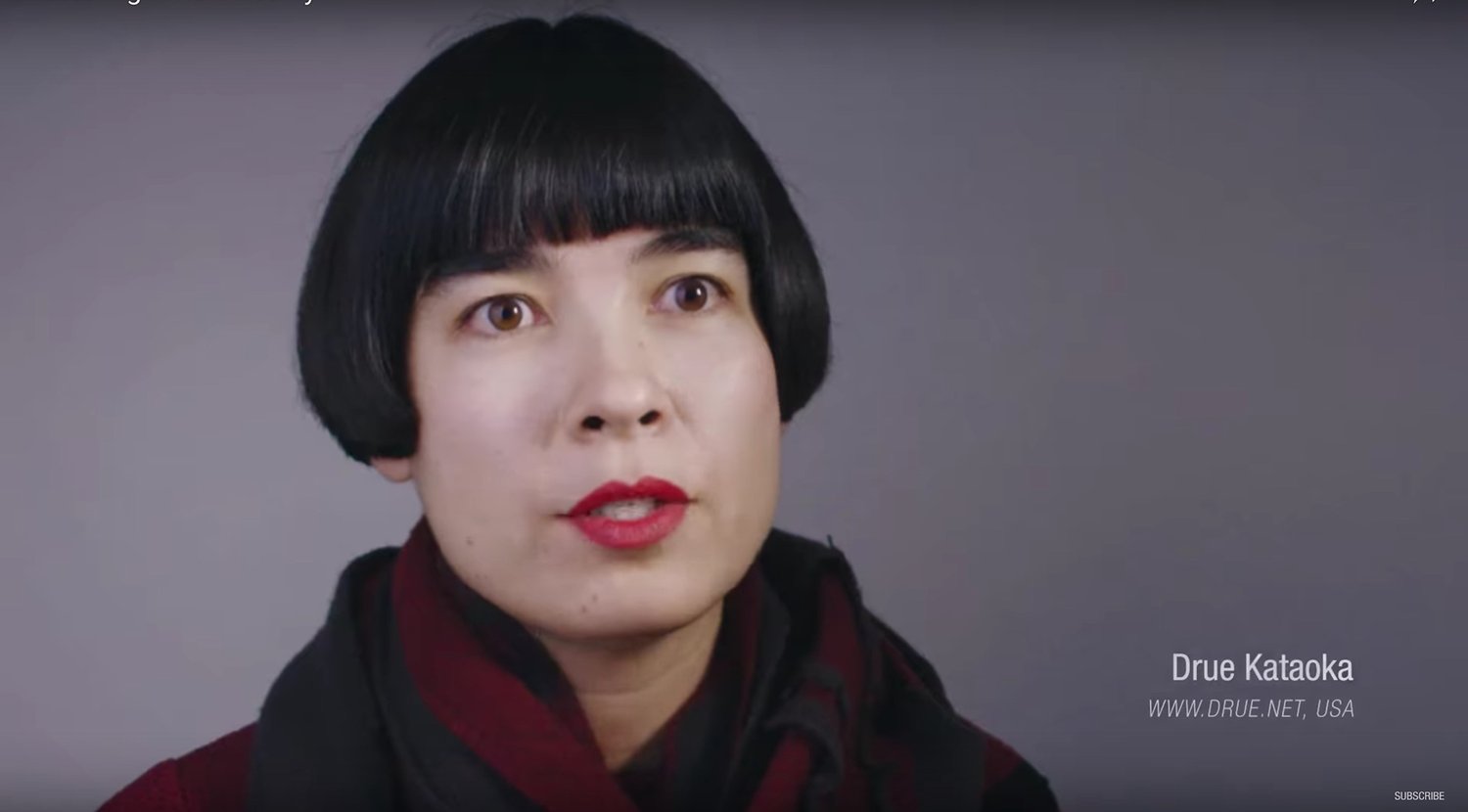
Drue speaking on immersive technology and the creative economy for the World Economic Forum.
From VR to AI: The Same Question, A Larger Answer
The questions Drue was asking at the dawn of VR — What happens when anyone can build a universe? What does authorship mean when the artwork is an experience? Can technology be an instrument rather than a vending machine? — turned out to be the questions of the AI era.
Today she is answering them again, at larger scale, in her AI work: building instruments, not simulations; treating each new medium not as a threat to art but as an invitation to it. The dawn she described in 2017 is now full daylight — and she is still working at the frontier.
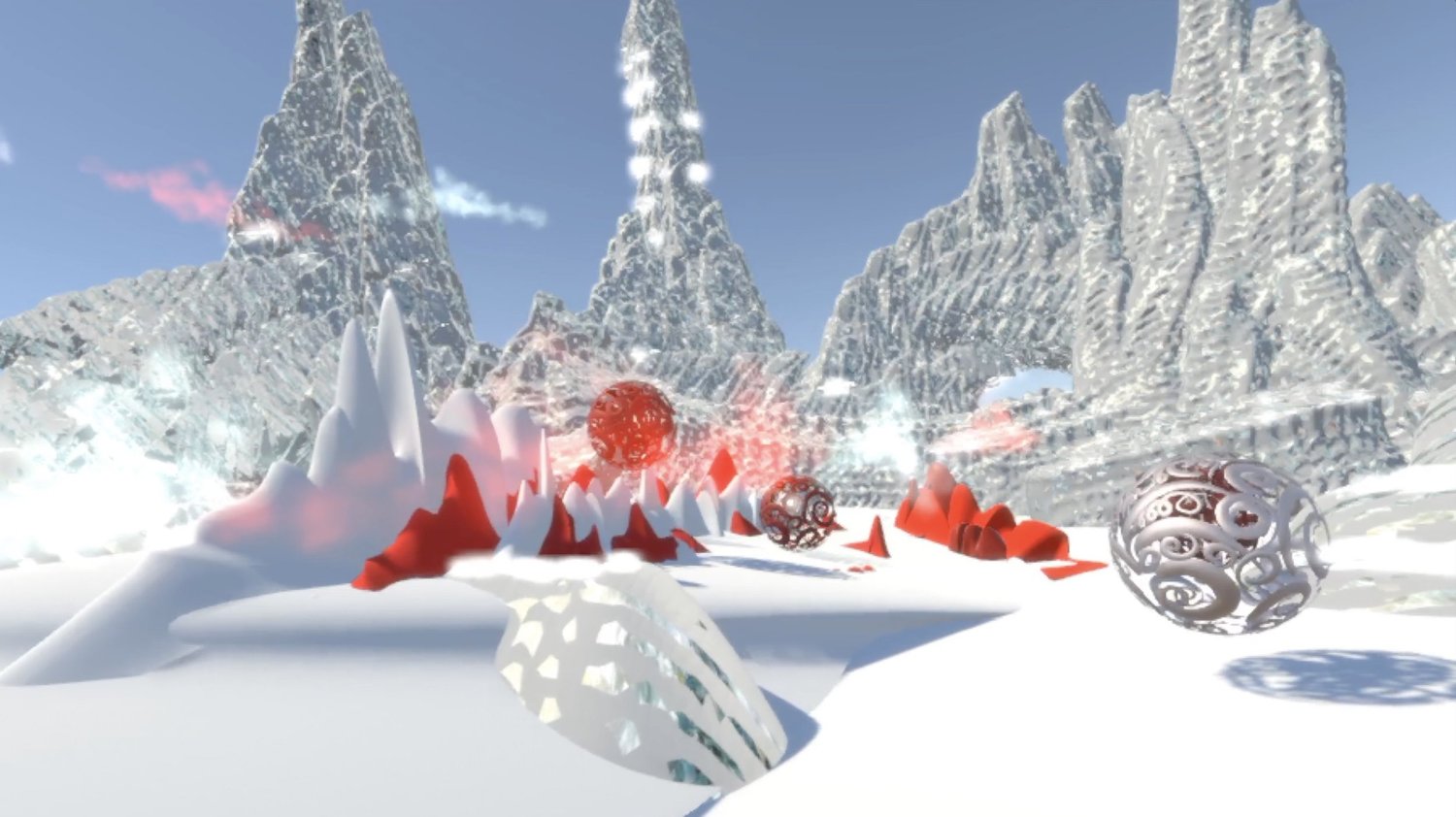
Broken Hearts — virtual reality artwork, made with Unity, Medium, Gravity Sketch, Tilt Brush and physical art.
The exhibition asked why we remember the past but not the future. This body of work, it turns out, did both.