- Drue's training in traditional Sumi-e
- Painting Nature
- Passionate about Nature
- Spirit of Nature in Modern Subjects
Drue's training in traditional Sumi-e
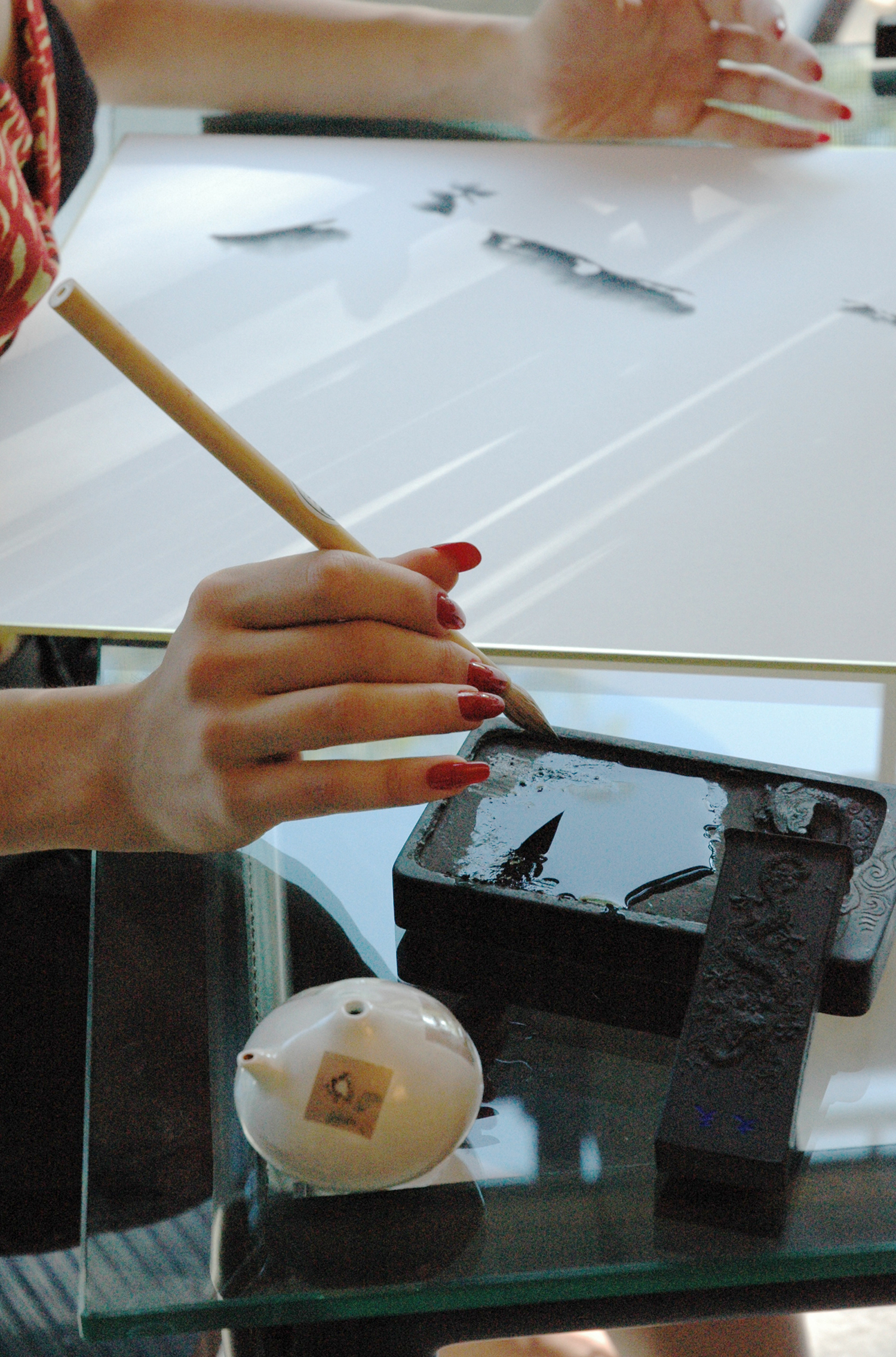
At the age of 3 Drue had a brush in hand. She took her first lesson in Sumi-e as a child in Tokyo. She studied with M. Iseke Sensei. Inspired by a long tradition of artists in the Kataoka family, she prepared herself to master the canon of brush strokes. She learned the foundation of Sumi-e through mastering classical subjects such as the matsu (pine), take (bamboo), and Fujisan (Mt. Fuji). "I feel lucky to have a childhood that was so rich with imagery and family stories. Those early memories of the landscape of Japan are indelibly impressed on my soul: Taking the train from Ueno Station that wound through the mountain passes on my way to visit my grandparents in Yamagata; Looking intently at the falling fragile cherry blossoms in Spring; Chasing the elusive glow of fireflies on warm June nights for Hotaru-gari (firefly viewing) at Chinzan-so gardens."
Buy an original traditional Sumi-e painting: contact drue@drue.net

Painting Nature
Spiritually rooted in Zen, Sumi-e's aesthetic principles are infused with a profound respect for the harmony, balance, and the perfection of imperfection found in nature. Painting nature in the classical canon of subject matter, Drue, as a young artist, developed her Sumi-e technique. "As a child, I was very dedicated. I would spend hours and hours painting just one bamboo leaf hundreds of times on unfurling roll of rice paper. I was deeply inspired by the beauty just beyond my doorstep. Each day growing up in Tokyo was an opportunity to observe and experience this natural beauty in its purist form. Almost every Sunday my father would take me to the gardens of the Imperial Palace in Tokyo. On many occasions, my mother would take me to the Tokyo National Museum. She recalls that I was mesmerized before the great masterpieces of Japanese brush painting."
Passionate about Nature
"Sumi-e is black and white, and also green. At the heart of the art form is a one-ness with nature. I am passionate about being an ambassador of Sumi-e for the 21st century, because embedded in this Zen art form are invaluable lessons of sustainability and renewal." Drue captures the graceful arc of a rapidly growing bamboo shoot under a gust of wind in Bamboo Startup, a painting of a classical subject with a Silicon Valley perspective. "The rapidly growing bamboo, which maintains strength and flexibility, reminds me of a startup that should also bend but never break under pressure." In Fly Me to the Moon an elegant crane soars towards a crescent moon in a Zen scene of tranquility and motion, calm in its ascent. The Dynamic energy of a flowing river is in delicate counterpart with the gentle reflections of moonlit trees in Twilight Courts the Moon. In Black by Black, Drue creates balance with a striking asymmetrical composition of misted mountains reflected in a lake.
Spirit of Nature in Modern Subjects
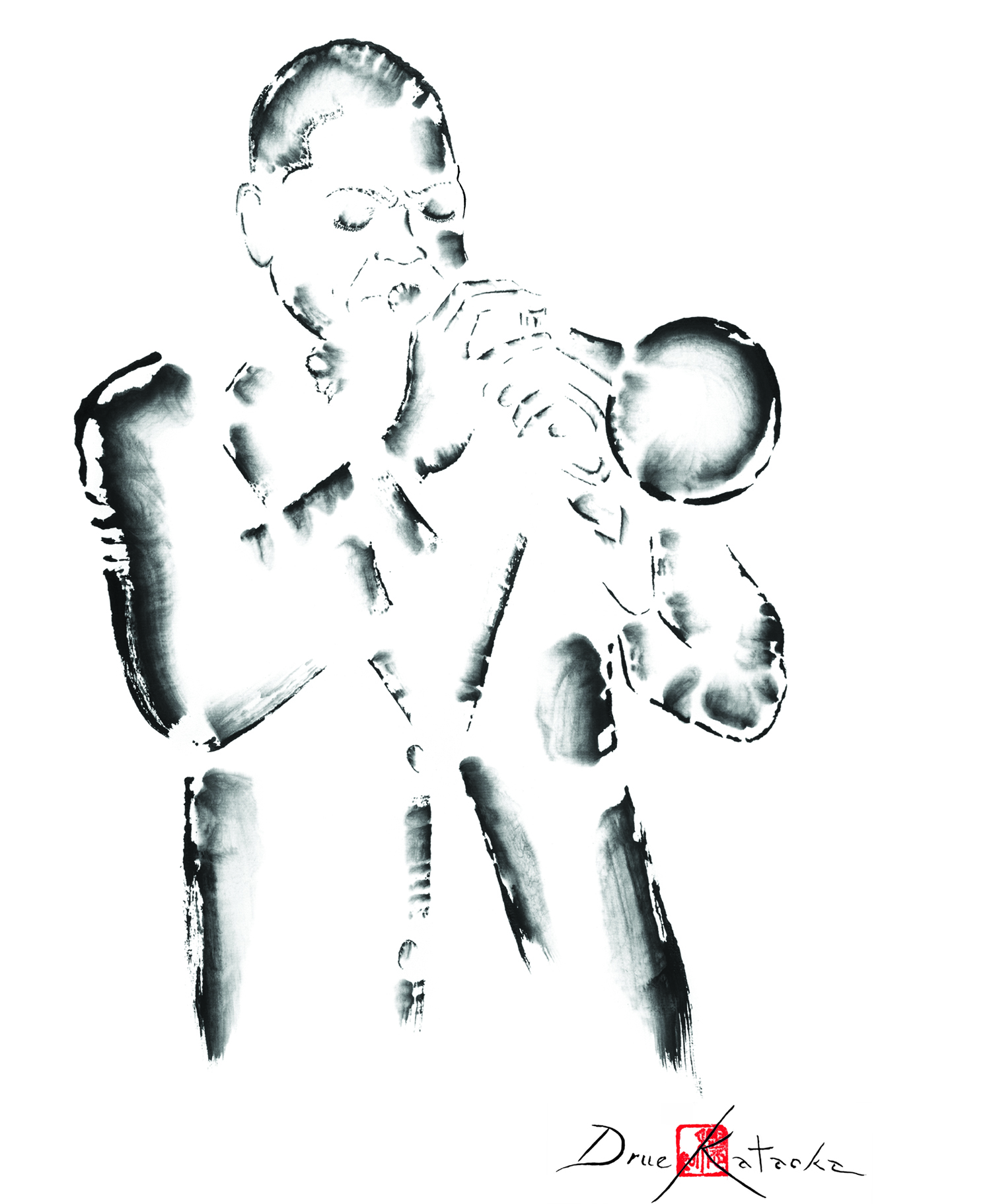
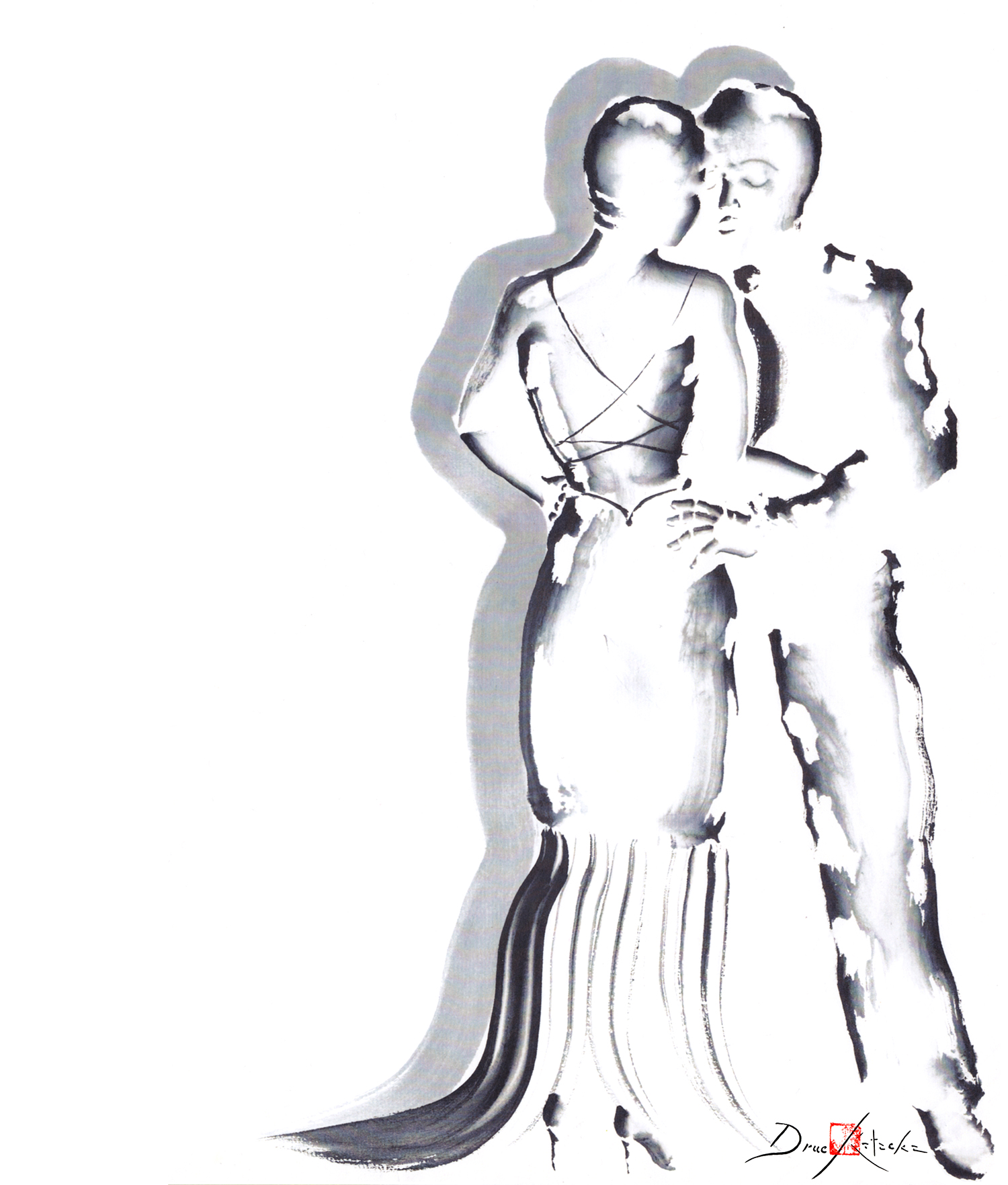
The spirit of nature lives in Drue's paintings of contemporary subject matter. Referencing a type of landscape brush stroke in a portrait of Wynton Marsalis, or Martin Luther King, Jr., she creates artistic commentary on their contributions to the cultural landscape of America. Painting ancient natural themes in modern contexts, she invigorates the Sumi-e tradition. Her painting Trafalgar Twilight is a nod to the importance of living creatures in the classical canon. Challenging stillness into motion, she brings a modern sculpture of one of London's Trafalgar Square lions to life. Drue returns to a well-known Zen subject of the lone boatman, afloat in the vastness of the sea. However, she re-imagines it in an unexpected way, making it Zen - as a Venetian Gondolier in Twilight Catches the Sun.
