Magic Boxes
Paintings that turn their backs on the viewer — glimpsed in fragments, reflected in shards, completed by memory.
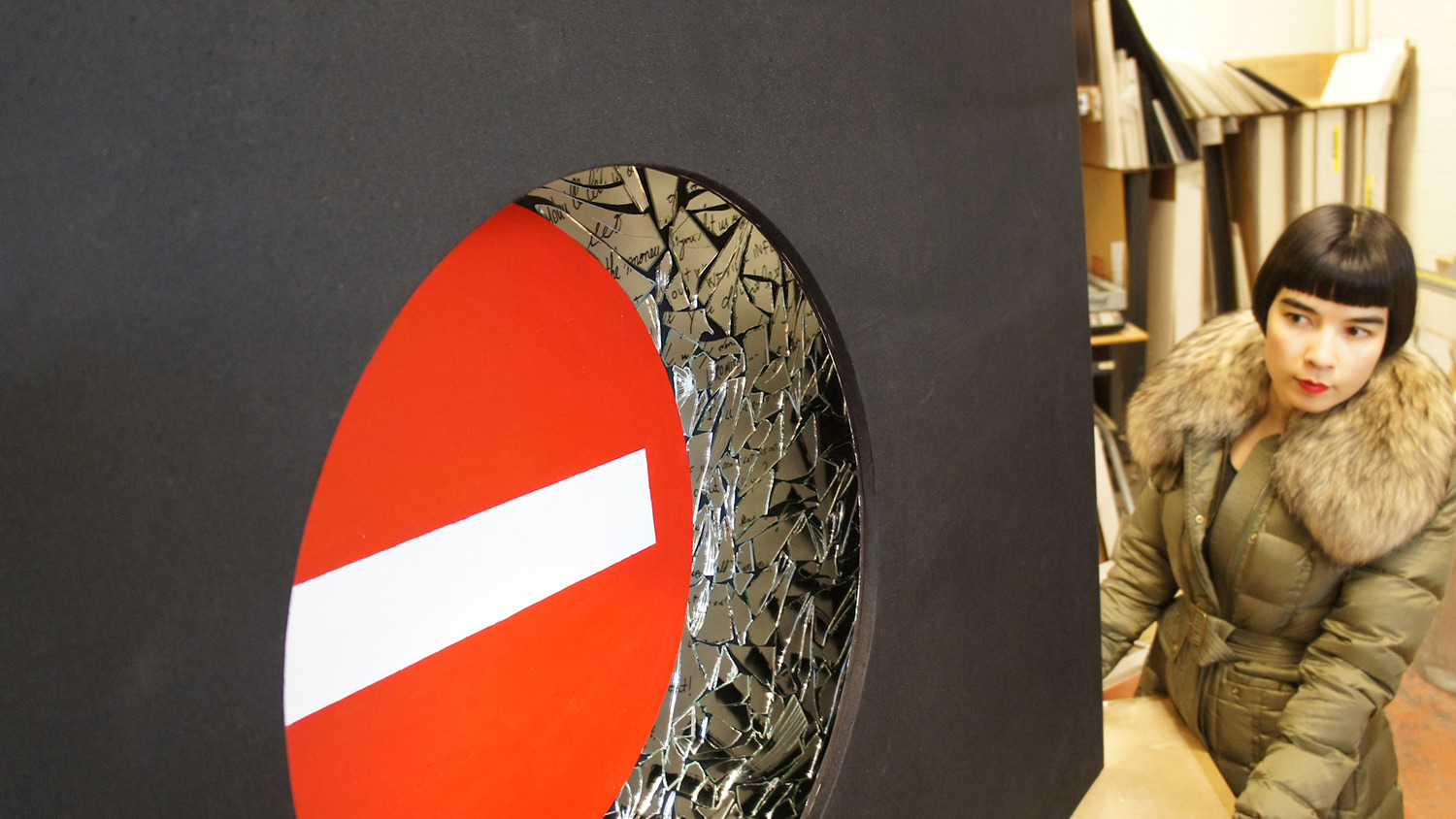
Every painting in the history of art has faced its viewer. Whatever the century, the school, or the subject, the canvas honors a single ancient contract: stand before me, and receive everything at once. The Magic Boxes — a new art form developed by Drue Kataoka Studios — are the first paintings to refuse that contract. They turn away.
Inside the Box
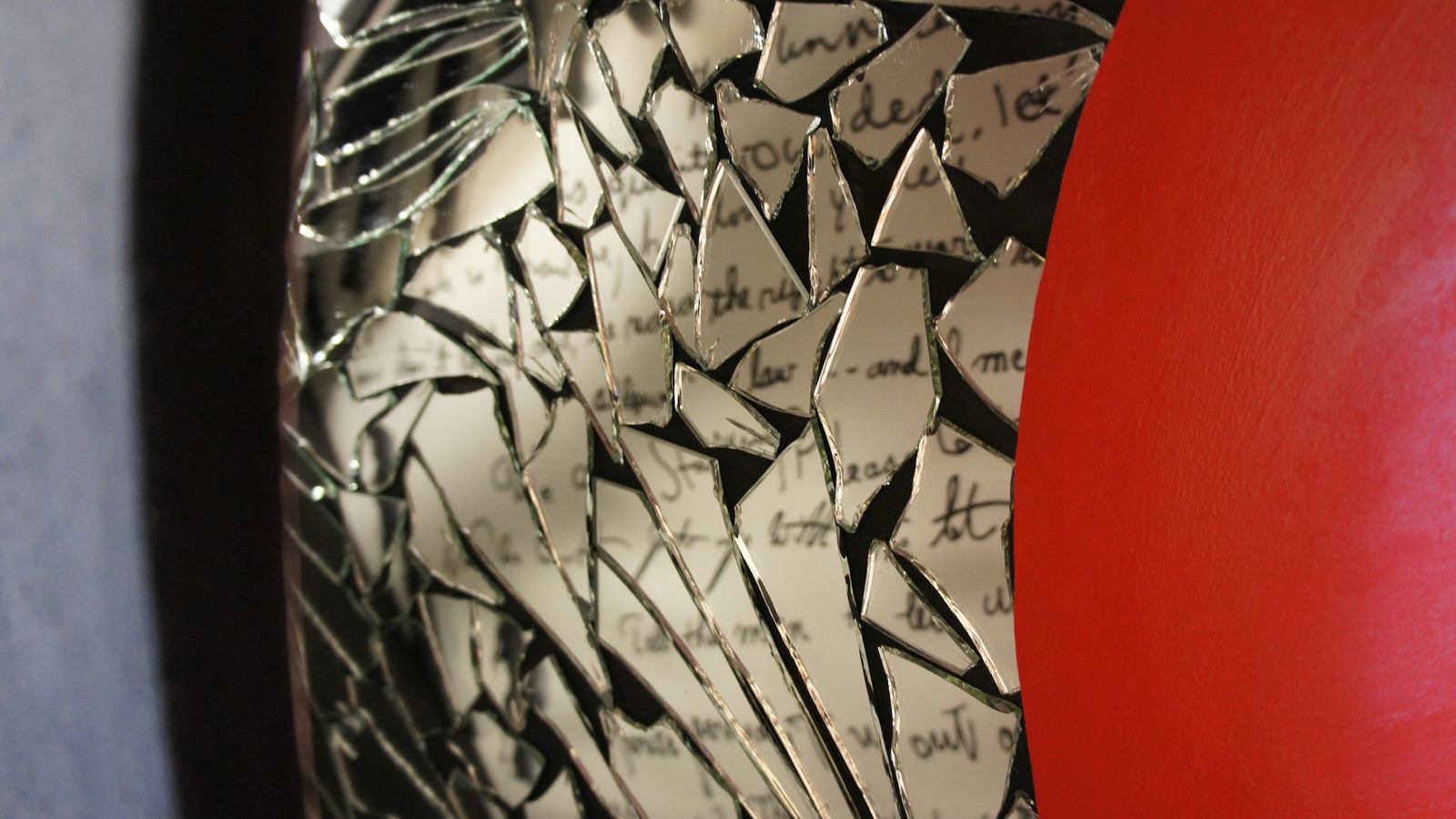
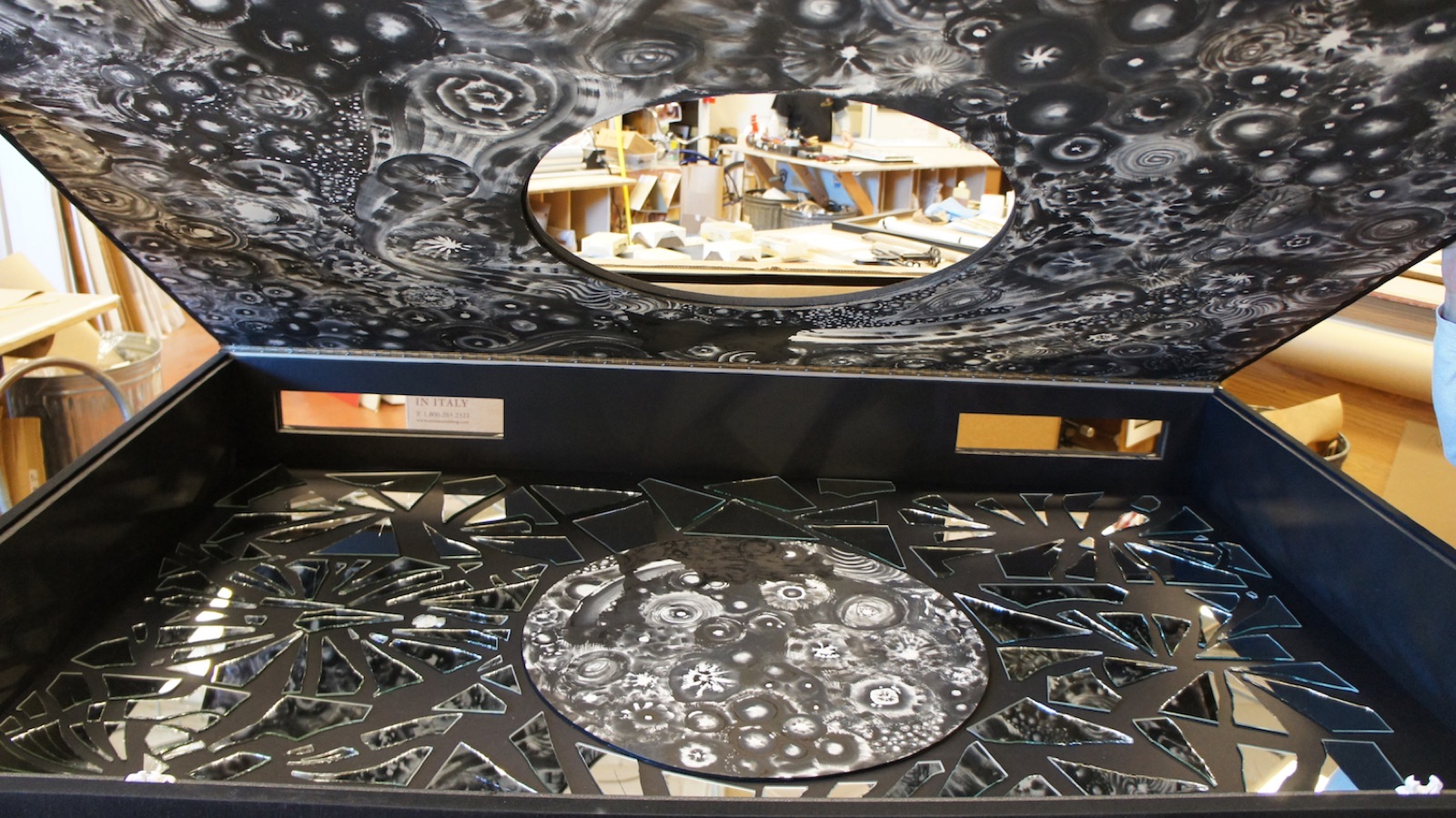
Within each box, the painting is rotated a full 180 degrees, its back to you. Approach, and you find no image at all — only a circular aperture. Peer through it, and you discover that the painting exists for you solely as reflection: scattered across a field of mirror fragments, in pieces, at angles, doubled and interrupted. Shift your body and one passage surfaces while another slips away; what was hidden emerges, what was vivid dissolves. Revelation and concealment arrive in the same gesture. No vantage point — no accumulation of vantage points — will ever yield the whole.
The painting can never be seen directly. It becomes legible only in the act of being partially seen.
How Knowing Works
The Magic Boxes are not puzzles awaiting solution. They are portraits of cognition — of the way anything is ever truly known. Nothing in life is disclosed to us completely and simultaneously. We learn a discipline — string theory, a language, an art — through scattered, nonlinear fragments, somehow extrapolating across the gaps into understanding. We come to know a person the same way: five minutes at a gathering; a lunch two years later; their book the year after that. We never receive the full download. From fragments we compose a picture — imperfect, provisional, and beautiful precisely because we made it ourselves. Such is memory: perpetually formulating across gaps, reconfiguring, recontextualizing.
The Viewer Completes the Painting
A Magic Box places that act at the center of the encounter. To see one is to be conscripted into making it. You must hold what you just saw and stitch it to what you are seeing now, assembling a whole that exists nowhere inside the box — only in you. The true canvas is not the panel turned away in the dark; it is the image forming and re-forming in your memory. Two viewers leave with two different painting impressions. Return tomorrow, and you will leave with another one.
Where Cubism compressed many viewpoints into one simultaneous image, the Magic Boxes run the operation in reverse: a single image is dispersed across your movement through time, and reunified only in the mind. And where the old trompe-l’oeil peep boxes used their apertures to perfect illusions of completeness, the Magic Boxes use theirs to tell the truth about incompleteness.
The form extends one of the deepest Zen principles of Kataoka’s classical sumi-e training, in which the unpainted interval — ma — is not emptiness but invitation: the space where the viewer’s mind completes the brushstroke. In the Magic Boxes, that invitation becomes architecture — a chamber built so that seeing and remembering become the same act.